Villas10.0
Santorini Sky, Luxury Resort
Pyrgos · Cyclades
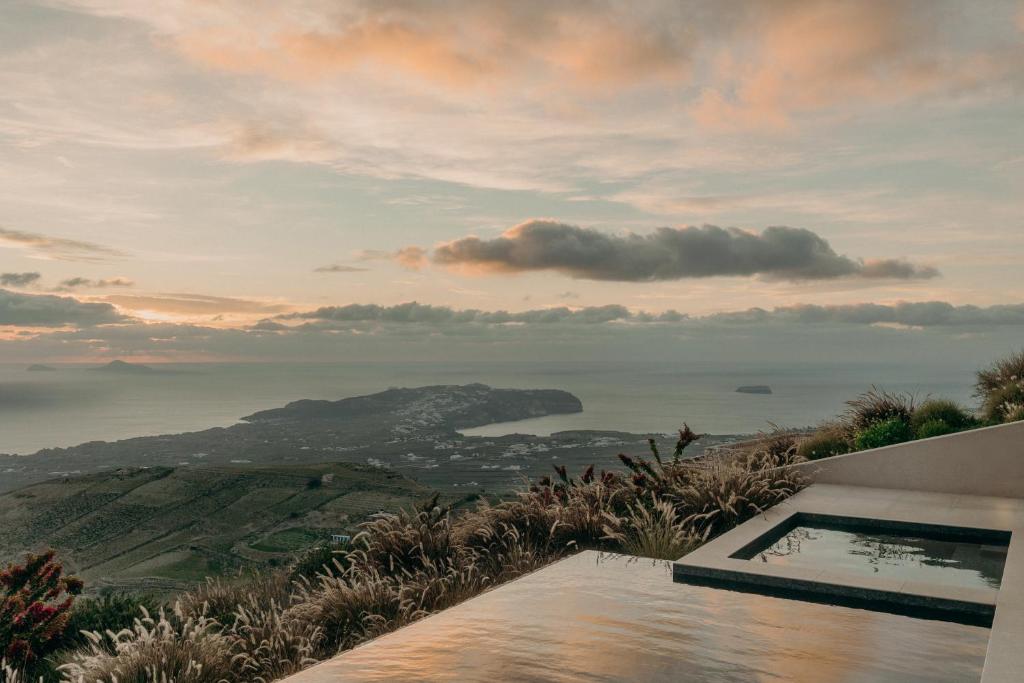
Villa in Pyrgos, Santorini, with a private hot tub, sea views, free private parking and pets allowed on request.
Exceptional · 692 reviewsSee prices
50 places to stay
The Cyclades take their name from the circle they form around sacred Delos: about 220 islands and islets in the middle of the Aegean, of which only the larger ones are inhabited all year round. What they share is whitewashed houses with flat roofs, dry-stone walls and terraces, chapels on barren hills and the north wind of summer. Beyond that, each island has its own rhythm: the volcanic caldera of Santorini, the fertile interior and big beaches of Naxos, the grand town of Ermoupoli on Syros, capital of the Cyclades, or the Small Cyclades with their few houses and quiet little harbours. The accommodation with character is mainly small hotels, guesthouses in traditional settlements, villas with pools and country cottages.
1–8 of 50
Pyrgos · Cyclades
Villa in Pyrgos, Santorini, with a private hot tub, sea views, free private parking and pets allowed on request.
Fira · Cyclades
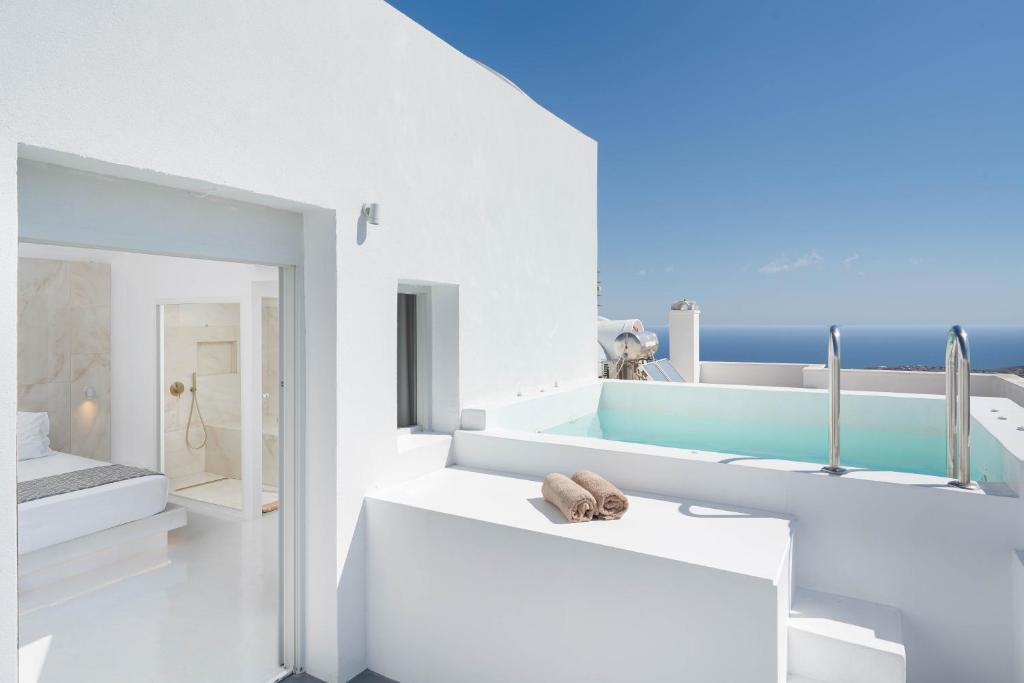
A hotel with suites in Fira, Santorini, featuring a private hot tub or private pool, a steam room and a wellness centre with a hammam.
Oia · Cyclades
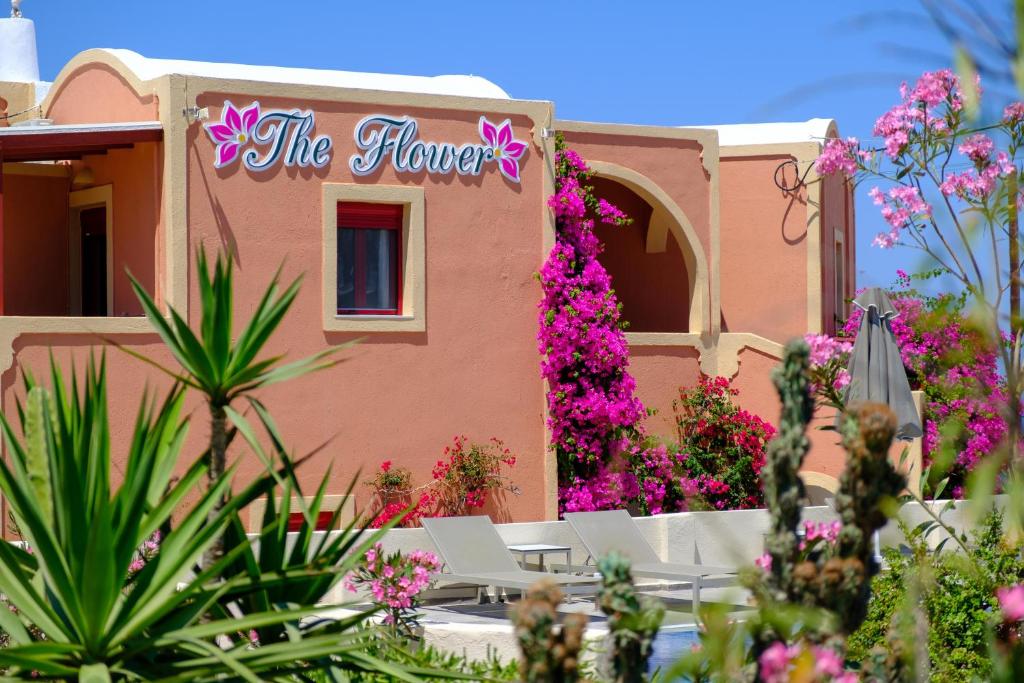
Guest house in Oia, Santorini, with a seasonal pool, garden and free parking, and rooms with sea views and a balcony or terrace.
Naxos Chora · Cyclades
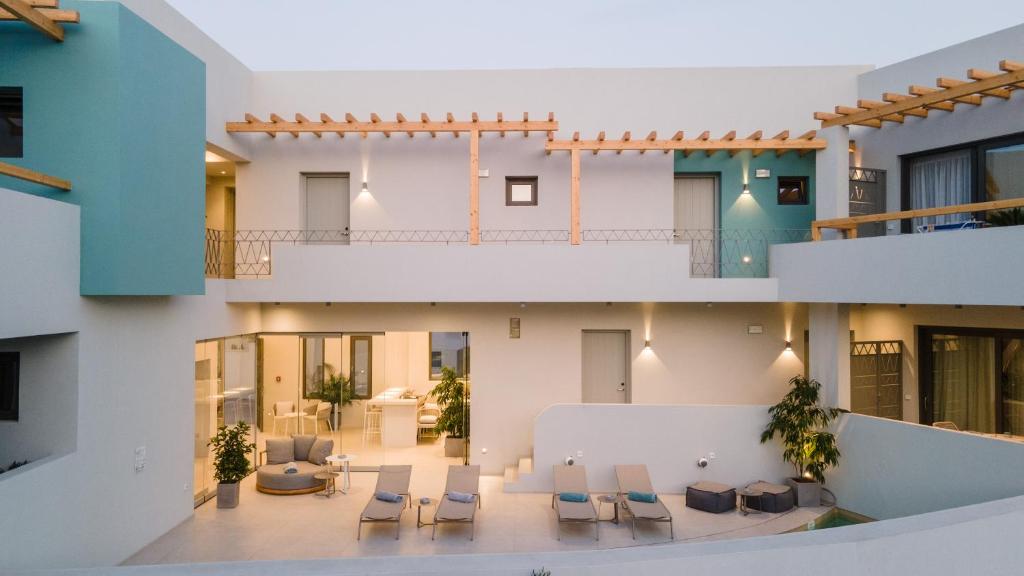
3-star adults-only hotel in Naxos Town, with a seasonal swimming pool, garden and bar, and Agios Georgios Beach 300 m away
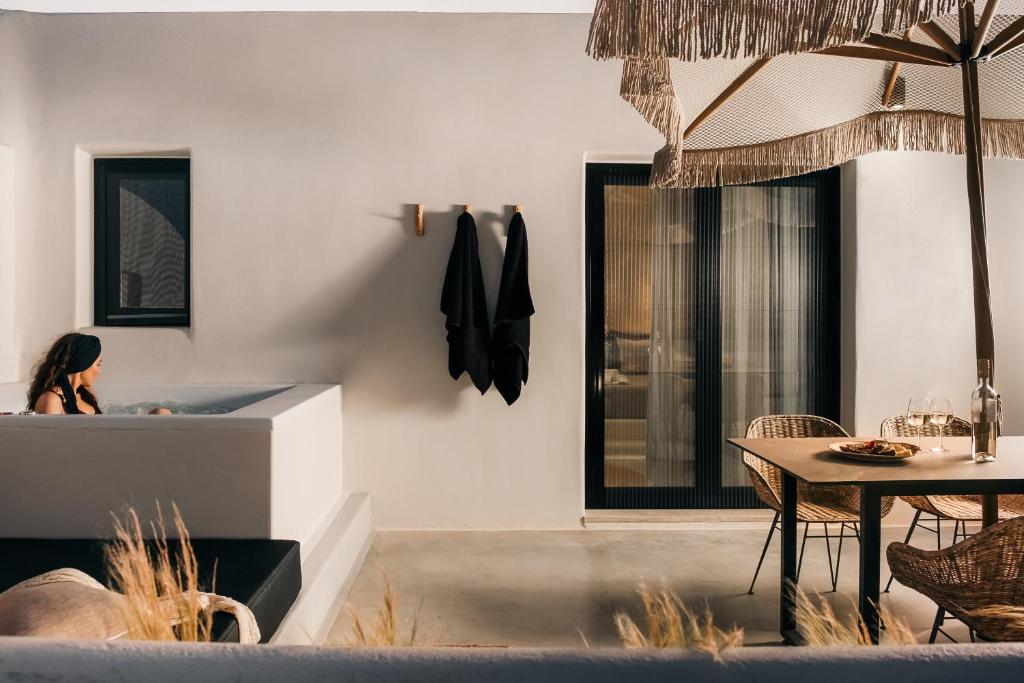
Naxos Chora · Cyclades
Guest house in Naxos Town with apartments and suites, several with a sauna and hot tub, and Naxos Castle 150 m away
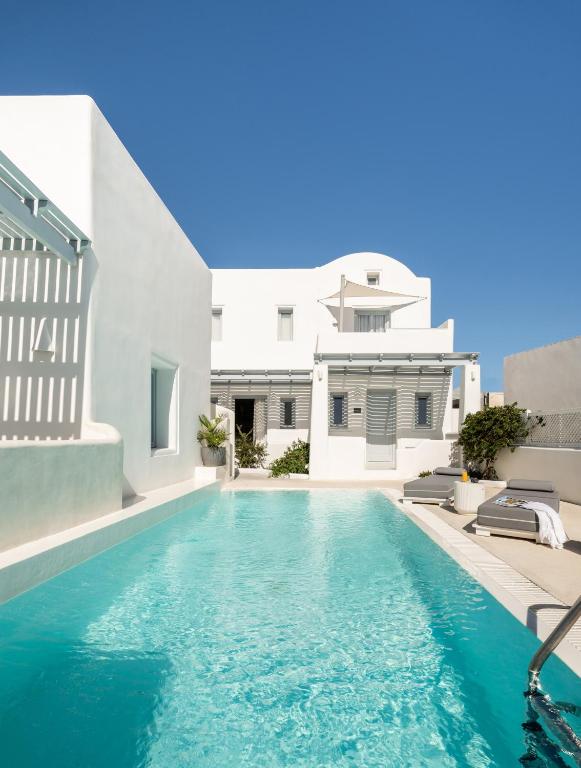
Fira · Cyclades
4-star villa in Fira, Santorini, with a seasonal outdoor swimming pool, hot tubs and villas with fully equipped kitchens, next to the Museum of Prehistoric Thera.
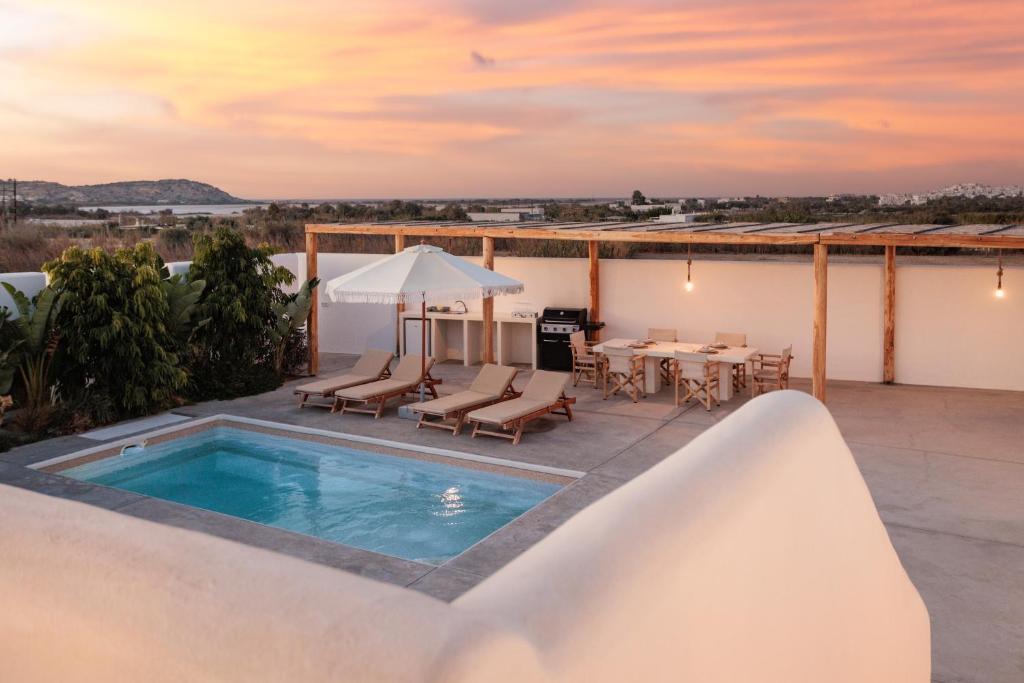
Naxos Chora · Cyclades
A 90 m² villa in Naxos Town with a private pool, garden, barbecue and two bedrooms, sleeping up to six people, 450 m from the airport.
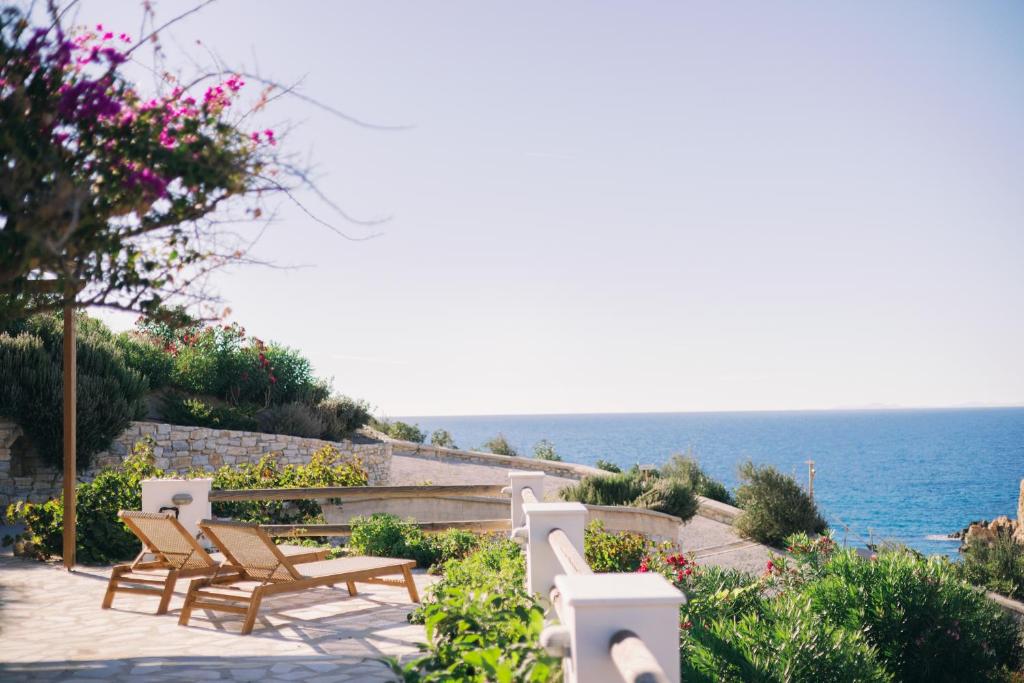
Naxos Chora · Cyclades
Holiday home on Naxos with 85 and 115 m² houses, fully equipped kitchens, barbecues, a terrace with a view and free private parking.
Guide to Cyclades
The first question is not "which is the most beautiful island" but what you want to do. If it is scenery and views you are after, Santorini has a landscape you won't find elsewhere in the Cyclades: the crater of the volcano and the villages on the cliff. If you want big beaches, mountain villages and plenty of options for families, Naxos, the largest and one of the most fertile islands of the group, with the highest peak in the Cyclades, Zas (1,004 m), offers more variety over shorter distances.
The other islands fall roughly into groups. The northern ones, Andros, Tinos and Kea, are greener than you might expect, with springs and trails; Tinos is also an important pilgrimage site, with the church of Panagia Evangelistria. The western Cyclades, Kythnos, Serifos, Sifnos, Milos and Kimolos, have a gentler pace, a well-known cuisine on Sifnos and volcanic coasts on Milos. Mykonos is the island of nightlife, while Folegandros, Sikinos, Amorgos and the Small Cyclades (Iraklia, Schinoussa, Koufonisia, Donousa) suit those looking for quiet and simplicity.
For a first trip, two islands in a week are usually enough; three or four means a good part of the holiday will be spent in ports. A combination that works well is one island with a striking image and many visitors together with a calmer island close by, so that the days alternate between sights and sea. Always check first whether there is a direct ferry link between the two islands you are interested in.
The high season is July and August, with the most ferries, the most tavernas open and the most people. Around 15 August the popular islands fill with Greek visitors too, and the festivals of Panagia give the villages a different colour. The heat usually peaks from late July to early August, but the wind makes it more bearable than in Athens.
That wind has a name: the meltemi. It is a north wind that blows mainly from mid-July to late August, often strengthening from the morning and peaking in the afternoon, and on the strongest days reaching 7-8 on the Beaufort scale. In practice it means that the north coasts of the islands get waves, while the southern bays are usually more sheltered; that ferries, especially the small high-speed ones, may be delayed or cancelled; and that a boat trip or kayak outing always needs a forecast check on the same day.
June and September are for many the best months: the sea is warm or warming up, services are running and there are fewer people. Spring, around Greek Easter, is ideal for walking and wildflowers, but the sea is still cold. From November to March many businesses on the small islands close and ferry services thin out; in winter the larger islands with a permanent population, such as Syros and Naxos, suit better.
Most ferries to the Cyclades leave from three ports in Attica. Piraeus serves almost all the islands, central, southern and western. Rafina is more convenient for the northern islands, such as Andros, Tinos and Mykonos, and in summer has services to other central islands too. Lavrio mainly links Kea and Kythnos. There are conventional ferries, slower but steadier when it is windy, and high-speed boats that save hours but are more affected by the weather.
Airports are found on Santorini, Mykonos, Naxos, Paros, Milos and Syros. Only the first two have many direct flights from abroad; the others receive mainly domestic flights from Athens. One way to save time is to fly to one island and return by ferry from another, as long as there is a connection.
Travel from island to island is easy between islands on the same "line", for example Paros, Naxos, Ios and Santorini, whereas going from the western to the central Cyclades often takes longer. Summer timetables are announced in spring and change from year to year, so check them before finalising your plans. Leave a margin of one day before your return flight: with the meltemi, a cancellation is not rare. On the larger islands there are buses; for beaches and villages in the interior a car or a scooter gives much more freedom.
On each island the basic choice is between the Chora, the main town, which is usually near the port or on a hill, and a seaside settlement. In a Chora, such as Naxos Town or Fira, you have tavernas, an evening stroll and transport without a car. At the beaches, such as Plaka on Naxos, you gain the sea at your door but often need transport. The villages on the cliff, such as Oia, have the most striking views but also the most people during the day.
Guesthouses are usually in renovated traditional houses within the settlements, as are many places offering breakfast, while country cottages with a courtyard and villas, often with a pool, are scattered across the countryside. The old settlements are built with narrow cobbled lanes and steps where cars cannot enter; if you have heavy luggage or find walking hard, ask how far the accommodation is from the road.
Water is precious: on many islands a large part of the drinking water comes from desalination, and summer demand is high, so ask whether the tap water is drinkable and use it sparingly. Sun and wind tire you more than it seems: a hat, sun cream and water are needed even on cooler days. In churches and monasteries dress modestly, and in small communities carry cash with you.