Hotels9.8
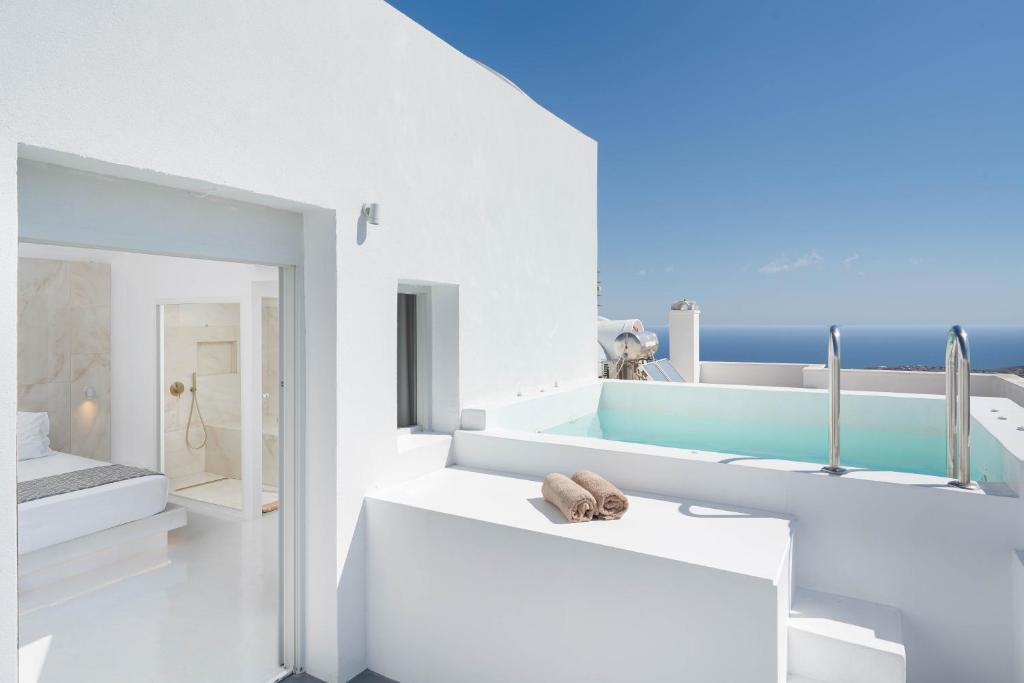
Cycladic Suites & Spa
Fira · Cyclades
A hotel with suites in Fira, Santorini, featuring a private hot tub or private pool, a steam room and a wellness centre with a hammam.
Exceptional · 1 210 reviewsSee prices
11 places to stay
Fira is the island's capital and the starting point for almost every journey. Built along the rim of the caldera, on a cliff that rises about 400 m, it looks straight across to the volcano of Nea Kameni and, beyond it, Thirasia. It is not the quietest village: by day it fills with cruise-ship passengers, and by night it has most of the bars and restaurants. It suits you if you want to get around without a car, have museums and nightlife on foot, and combine caldera views with the comforts of a small town.
1–8 of 11
Fira · Cyclades
A hotel with suites in Fira, Santorini, featuring a private hot tub or private pool, a steam room and a wellness centre with a hammam.
Fira · Cyclades
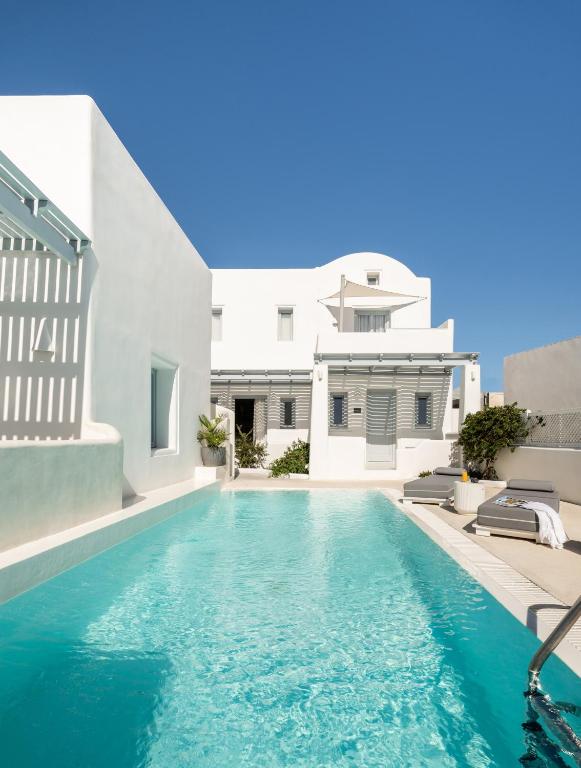
4-star villa in Fira, Santorini, with a seasonal outdoor swimming pool, hot tubs and villas with fully equipped kitchens, next to the Museum of Prehistoric Thera.
Fira · Cyclades
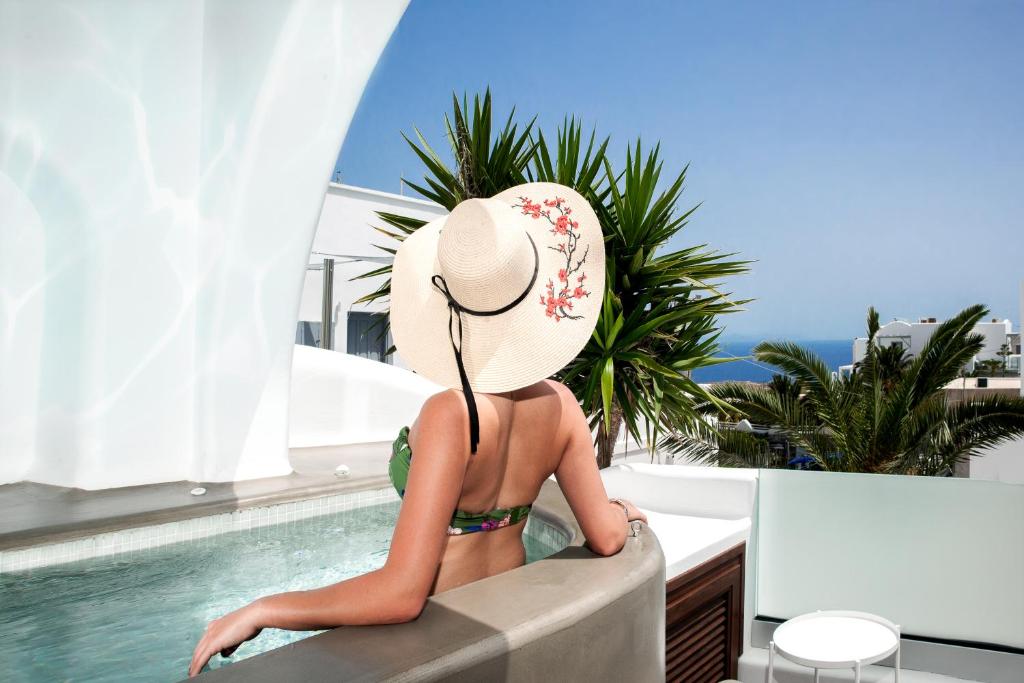
4-star bed and breakfast in Fira, with suites featuring outdoor hot tubs, pool views and museums within walking distance.
Fira · Cyclades
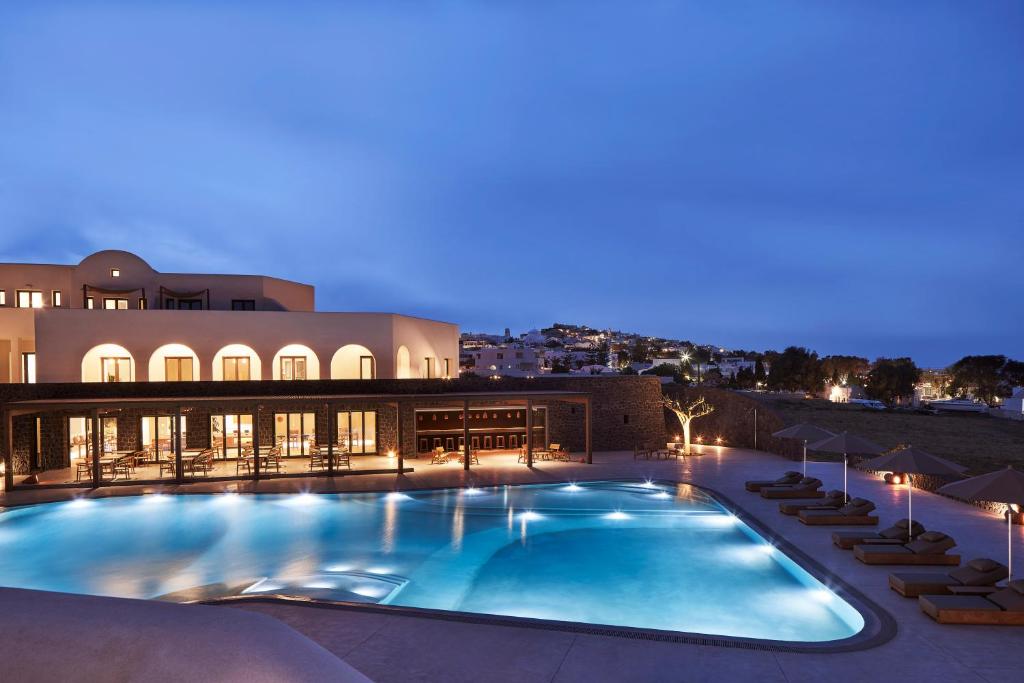
5-star hotel in Fira, Santorini, with a seasonal outdoor pool, spa and wellness centre, restaurant and a balcony in every room.
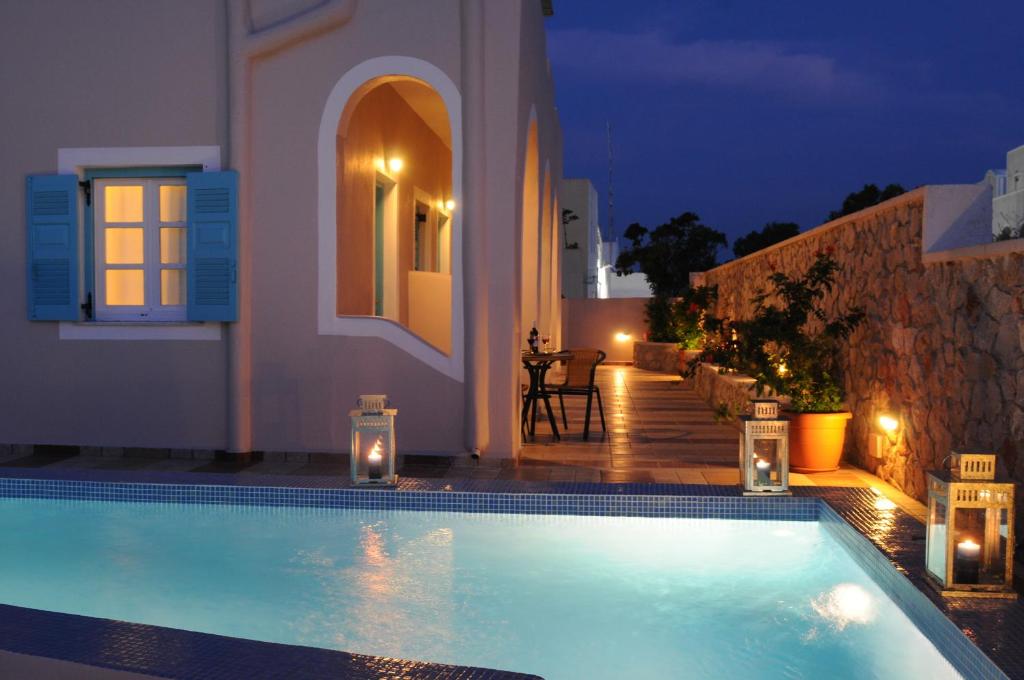
Fira · Cyclades
Hotel in Fira, Santorini, with studios, an apartment and double rooms, a small pool with a sun terrace, and the caldera a three-minute walk away.
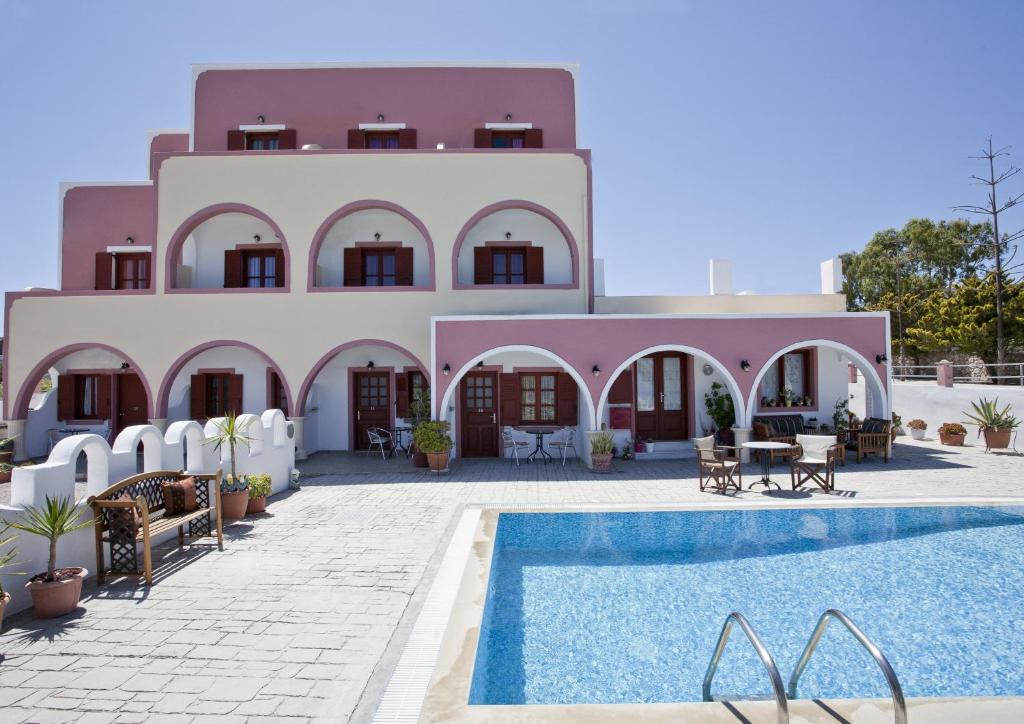
Fira · Cyclades
Guest house in Fira, Santorini, a 5-minute walk from the centre, with a pool with a hot tub, sunrise views and rooms with balconies.
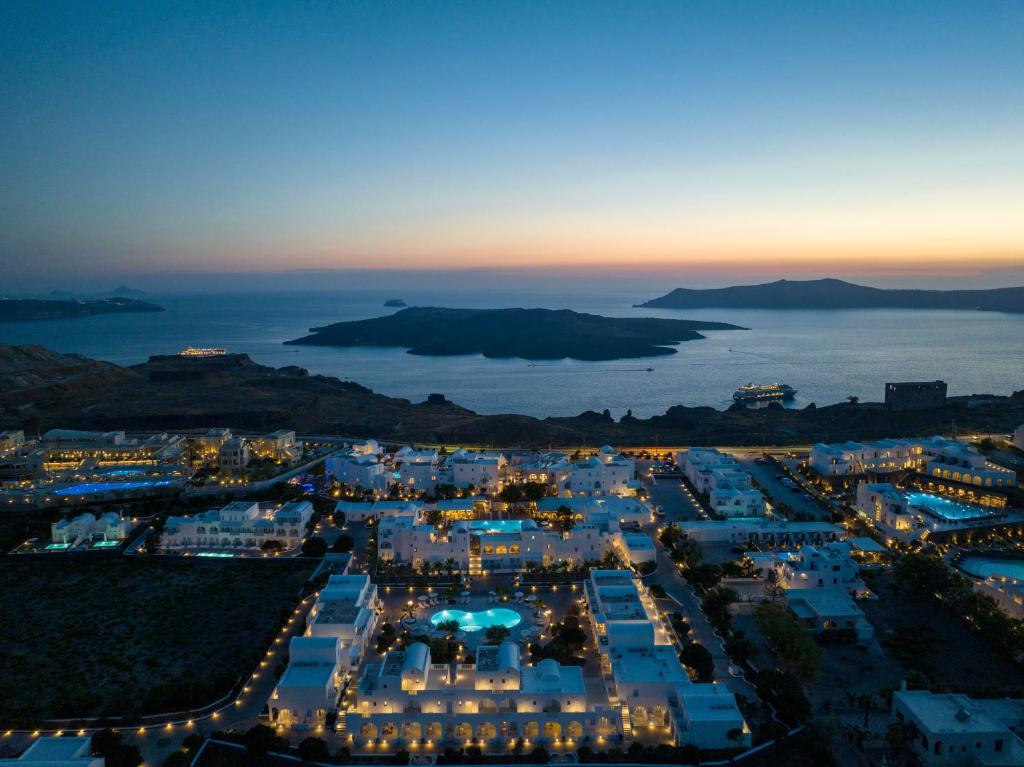
Fira · Cyclades
4-star hotel in Fira, Santorini, with six outdoor pools, an adults-only spa with an indoor pool and a restaurant.
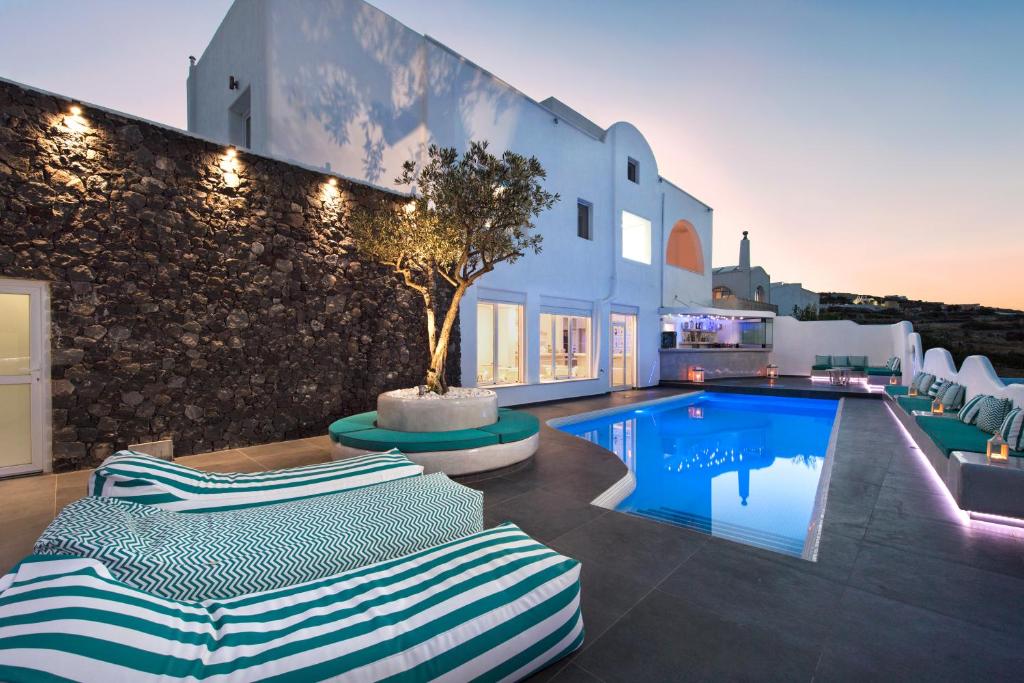
Fira · Cyclades
Guest house in a quiet area of Fira, 500 m from the main square, with a traditional courtyard, outdoor swimming pool and rooms with balconies or hot tubs.
Guide to Fira
Fira became the capital of Santorini relatively late. Until the end of the 18th century the island's centre was the castle of Skaros, above Imerovigli; its inhabitants, like those of other settlements, gradually moved here, closer to the port. The town spread along a narrow strip beside the caldera, with churches and monasteries grouped by religious community. The earthquake of 1956 did great damage, and many buildings, among them the Orthodox cathedral, were rebuilt over the following decades.
On the northern side lies Frangomachalas, the Catholic quarter, with mansions of old Catholic families, the Cathedral of St John the Baptist and the Lazarist and Dominican monasteries. It is also home to the Gyzi Mansion, a cultural centre in a 17th-century house, with maps, costumes and manuscripts. It is the quietest corner of the town and a reminder that for centuries the island had two communities, Orthodox and Catholic.
The main choice is between the caldera side and the inland part of town. Accommodation on the cliff, often stepped or carved into the rock, has terraces looking over the volcano and Thirasia, but to reach your room you go down steps, sometimes many of them, and luggage is carried by hand. Further east, on the road side, you lose the view but gain easy access by car or taxi and are a few minutes from the bus station.
Fira suits first-time visitors, travellers without a car, anyone who wants a night out, and those continuing by boat to other Cyclades islands. If you want calm, choose the northern end towards Firostefani, which almost merges with the town: the view is the same, the noise from the bars fades, and the centre is about twenty minutes away on foot. For a quieter, everyday setting without the caldera, look at the villages just outside the town, such as Karterados.
The Museum of Prehistoric Thera, next to the cathedral, displays finds from the Bronze Age settlement at Akrotiri, including wall paintings and vases; it is worth seeing before or after the excavation site. The Archaeological Museum, a few metres from the cable car, covers the periods from the Early Cycladic to the Classical era. Ypapantis Street, known as the "Golden Street" for its jewellery shops, leads to the cathedral and the viewing terrace where people gather for sunset.
Below the town is Gialos, the old port, where the tender boats from the cruise ships land and the caiques leave for the volcano. It is linked to Fira by the Karavolades, a zigzag path of about 600 steps, and since 1982 by the cable car, a gift from the shipowner Evangelos Nomikos. Walking down is easy, climbing back in the heat is tiring; watch out for the animals using the steps and, if you can, avoid the hours when cruise passengers disembark.
Fira is about 5 km from the airport and about 8 km from Athinios, the port where the ferries dock. The main KTEL bus station is here: all routes start from Fira, so to go from one village to another you usually change buses in town. The centre is pedestrianised and parking spaces are few; you need a car for excursions, for example to Pyrgos or the beaches of the south, not within the town.
From the northern end the caldera path sets off towards Oia: about 10 km through Firostefani and Imerovigli, with a detour to the rock of Skaros, taking three to five hours depending on your stops. The first stretch is paved; further on the way becomes a dirt track, stony and almost without shade. Start early in the morning or late in the afternoon, take water with you, because there are few places to refill, and come back by bus.